Is your groundwater truly as pristine as it appears? It often looks crystal clear straight from the tap. Yet, dangerous pathogens like E. coli, coliform bacteria, and unseen viruses frequently lurk within untreated aquifers. Relying solely on the earth's natural filtration layers is a dangerous gamble. This presents a significant challenge for rural and suburban homeowners. How do you navigate a flooded market to find a reliable purification system?
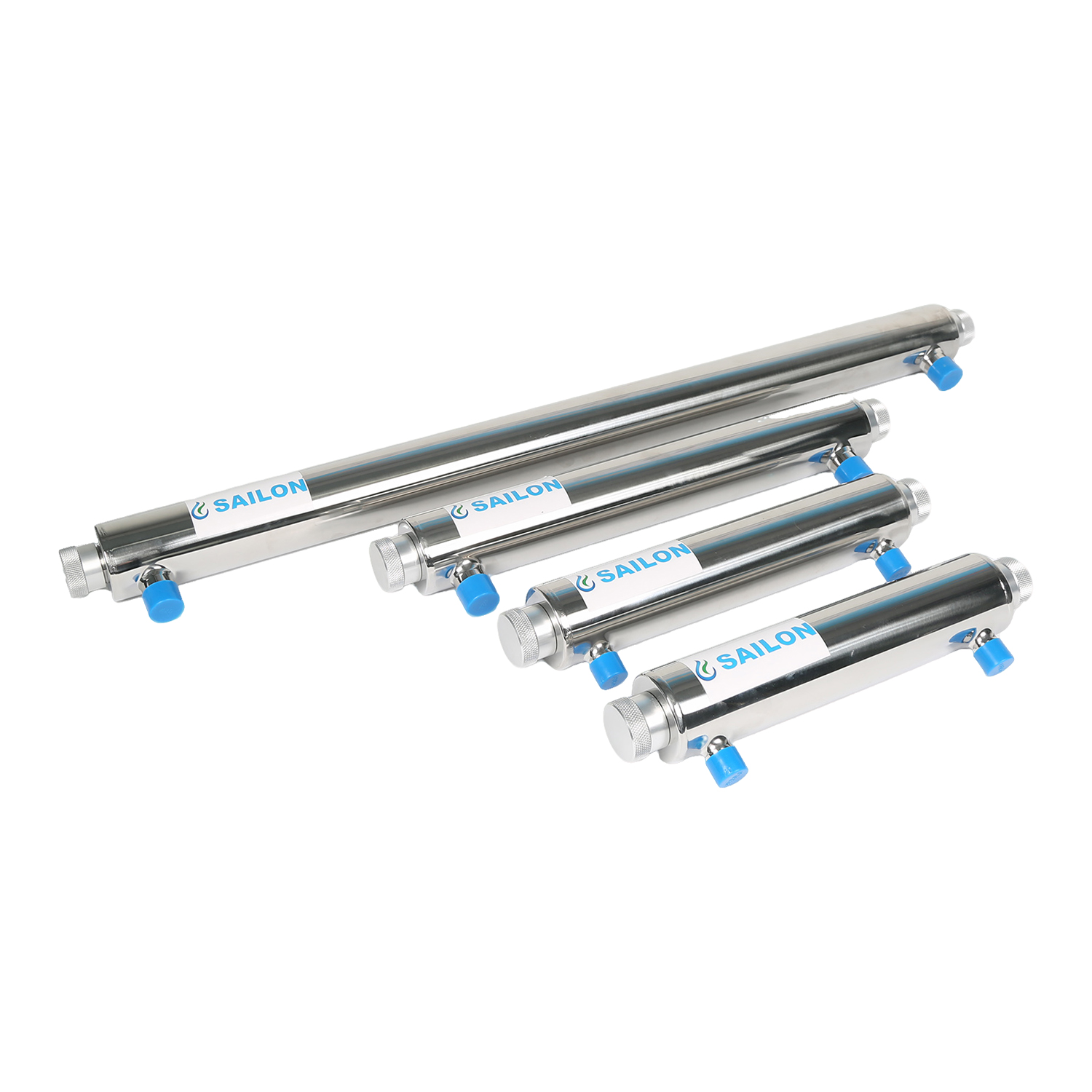
Enter the Stainless Steel UV Sterilizer. Water treatment engineers widely recognize this technology as the gold standard for highly effective, chemical-free disinfection. However, not all ultraviolet systems are manufactured to the same rigorous standards. As a seasoned fluid dynamics specialist, I will help you decode these technical specifications. We will explore everything from material metallurgical grades to internal hydraulic dynamics. This ensures you select the exact model tailored to your home's unique plumbing infrastructure.
The Shifting Landscape of Groundwater Safety
Recent environmental data reveals a concerning trend across the water treatment sector. Extreme weather patterns, prolonged droughts, and intensified agricultural runoff are causing unprecedented fluctuations in groundwater quality. Aquifers that tested perfectly safe a decade ago are now highly vulnerable to sudden contamination spikes.
Consequently, the industry is witnessing a massive consumer shift. Homeowners are rapidly transitioning from basic pitcher filters toward industrial-grade, continuous-duty UV barriers. A robust system acts as a relentless gatekeeper. It guarantees your family's safety regardless of unpredictable seasonal shifts in your local water table.
Key Takeaways for System Selection
Material Matters: The choice between 304 and 316 stainless steel depends entirely on your specific mineral and chloride content.
Sizing is Crucial: Your sterilizer's capacity must match or slightly exceed your well pump's absolute maximum output.
Design Impacts Efficiency: Advanced internal architecture creates turbulence, ensuring maximum light exposure to neutralize 99.99% of pathogens.
Pre-treatment is Mandatory: You must install a UV unit after sediment filters and water softeners to prevent bacterial "shadowing."
Why Choose a Stainless Steel UV Sterilizer?
Chemical-Free Purification
Modern municipal treatment historically relies on heavy chlorination. Unfortunately, this approach leaves behind an unpleasant, bleach-like taste and a distinct odor. Ultraviolet sterilization offers a vastly superior, eco-friendly alternative. By harnessing high-intensity UV-C light at the 254nm wavelength, these advanced systems penetrate the cellular walls of microorganisms. The light permanently alters their DNA. As a result, bacteria and viruses are rendered sterile and unable to reproduce. You achieve safe, potable water without introducing harsh chemicals into your daily drinking supply.
Unmatched Structural Durability
When evaluating plumbing hardware, structural integrity remains non-negotiable. Budget-conscious homeowners might initially consider PVC housings. However, plastic inevitably degrades under relentless UV exposure and the high-pressure surges typical of residential deep-well pumps. In stark contrast, a metal chassis provides unparalleled strength.
Furthermore, premium systems feature an electro-polished interior. This steel chamber acts as a highly reflective mirror. The reflectivity bounces stray UV-C rays back into the water column. This exponentially amplifies the germicidal intensity compared to opaque plastic alternatives.
Which is Better for Your Well: 304 or 316 Stainless Steel?
Understanding the Metallurgical Differences
Engineers consider 304-grade steel the workhorse of the water purification industry. It delivers exceptional rust and corrosion resistance for the vast majority of residential applications. If your recent laboratory tests indicate stable mineral levels, this specific alloy stands out as the most cost-effective foundation for your setup.
For more demanding environments, the 316 variant incorporates a crucial additive: molybdenum. This specific element drastically enhances the metal's resilience against harsh chlorides and dissolved salts. If your property sits near a coastline, or if your aquifer suffers from high salinity, upgrading is absolutely essential. The enhanced alloy actively prevents microscopic pitting corrosion that would otherwise compromise the chamber wall over years of constant exposure.
Core Material Comparison
Feature
304 Stainless Steel
316 Stainless Steel
Corrosion Resistance
High - Ideal for standard freshwater
Superior - Built for high chloride/salinity
Pitting Resistance
Moderate
Excellent - Thanks to added molybdenum
Best Application
Inland wells with stable mineral chemistry
Coastal properties or harsh groundwater
Before purchasing any equipment, you must establish a baseline. Conduct a comprehensive laboratory analysis of your tap water. Pay close attention to chloride concentrations. For those with moderately hard freshwater, evaluating 304 vs 316 usually points toward the 304 option as perfectly sufficient.
Understanding Flow Rate Sizing Dynamics
The Danger of Incorrect Sizing
Engineers measure capacity in Gallons Per Minute - GPM. This Flow Rate serves as the absolute most critical sizing metric for any ultraviolet installation. It directly dictates the duration that moving water remains exposed to the germicidal lamp.
Imagine your household pump pushing 15 GPM during the morning rush. Meanwhile, your sterilizer is only rated to handle 8 GPM. The liquid rushes past the lamp far too rapidly. Pathogens will easily slip through the chamber before absorbing a lethal dose of radiation. This renders the entire setup completely ineffective. Conversely, if the movement is excessively slow, stagnant water can overheat inside the casing, potentially damaging sensitive internal quartz components.
How to Match Your Pump Output
I frequently see homeowners make a critical error by guessing their water usage. Instead, consult your pump's specification badge to identify its absolute peak output. Your chosen UV unit must be rated at or slightly above this maximum threshold.
As a practical rule of thumb in the field: if your peak draw is 10 GPM, purchasing a 12 GPM unit provides a comfortable safety margin. For example, modern high-performance systems operating at 110V/220V with a 55W lamp configuration are engineered specifically to handle 12 GPM. They deliver the required 30 mJ per square centimeter dosage without breaking a sweat. For larger estates, upgrading to a 24 GPM commercial-grade reactor ensures zero pressure drop during high-demand periods.
The Engineering Behind Chamber Design
Maximizing Dwell Time and Turbulence
The physical architecture of the housing separates professional-grade equipment from basic hobbyist hardware. Advanced Chamber Design manipulates the fluid path to maximize contact time, commonly referred to as dwell time. Elongated, meticulously proportioned cylinders generally yield the most uniform radiation exposure.
Fluids naturally seek the path of least resistance. Without engineered internal baffling, rushing water might channel straight through the center. This completely bypasses the intense energy zone near the quartz sleeve. Purpose-built internal structures intentionally create controlled turbulence. This dynamic forces every single droplet to swirl intimately close to the glowing glass, ensuring no microbe escapes treatment.
Pre-Filtration: The Secret to Sterilization Success
Defeating the Shadowing Effect
Ultraviolet light possesses incredible destructive power, yet it cannot penetrate solid matter. Turbidity, suspended iron flakes, and sand effectively act as microscopic shields for bacteria. If your supply contains floating particulates, harmful microbes will literally hide behind them. They travel safely through the intense light zone unscathed. Industry experts refer to this dangerous phenomenon as the shadowing effect.
Recommended Pre-Treatment Protocols
To safeguard the integrity of your sterilization process, establishing a rigorous pre-filtration barrier is mandatory. A standard 5-micron sediment filter is non-negotiable for capturing grit. Additionally, if your lab results show iron levels exceeding 0.3 ppm, a dedicated iron filter prevents dark staining on the glass. Finally, a water softener is highly recommended if hardness exceeds 7 grains per gallon - gpg. This stops calcium scale from blinding the lamp.
Proper sequencing dictates success in any pump house. Your plumbing schematic should follow this exact flow: Well Pump, followed by the Pressure Tank, then the Water Softener or Iron Filter. Next comes the 5-Micron Sediment Filter, culminating finally at the UV Sterilizer. This strict hierarchy ensures only visually pristine liquid ever enters the final disinfection stage.
Crucial Engineering Factors to Consider Before Buying
Certified UV Dose Requirements
The delivered dosage is the ultimate measure of a system's destructive capability. For standard residential groundwater, industry guidelines dictate a minimum dose of 30 to 40 mJ per square centimeter at the very end of the lamp's lifecycle. This specific threshold guarantees that stubborn, common pathogens are thoroughly neutralized. Always verify that the manufacturer provides third-party certified dosage ratings.
Electronic Ballast and Lamp Life
Germicidal bulbs possess a finite operational lifespan. They typically cap at 9,000 hours, which translates to exactly one year of continuous use. Modern systems feature integrated digital countdown timers or audible alarms. These vital alerts eliminate guesswork, preventing the dangerous scenario of relying on an expired bulb.
Think of the electronic ballast as the central nervous system of your purification setup. Seek out smart controllers equipped with real-time diagnostic capabilities. These intelligent hubs can instantly detect voltage fluctuations or lamp failures. They display error codes on a digital screen, transforming troubleshooting from a frustrating chore into a quick, straightforward task.
Top Recommendations for Your Home
Selecting the appropriate equipment demands a careful balance of proven durability and advanced engineering. Sailon UV provides a comprehensive lineup specifically tailored for the unpredictable nature of untreated Well Water. By offering both high-grade 304 and 316 options, they allow homeowners to match the exact metallurgical profile to their specific aquifer chemistry. Whether you require a standard 12 GPM residential unit or a robust 24 GPM high-flow system, partnering with an established manufacturer ensures that crucial replacement components remain readily accessible for decades.
Conclusion
In an era of increasingly unpredictable groundwater quality, a stainless steel ultraviolet sterilizer stands as the ultimate safeguard for your home. By accurately matching your pump's output and implementing the correct sequence of pre-filtration, you create an impenetrable barrier against microscopic threats. Comprehensive water testing is always your starting point. Use those insights to select the perfect alloy grade, invest in professional-tier equipment, and enjoy the profound peace of mind that comes with safe, pristine hydration at every tap. Ready to secure your water supply? Evaluate your pump's peak output today, and explore the robust systems available at Sailon UV to find the exact match for your infrastructure.
FAQ
Does a stainless steel UV sterilizer change the taste of my well water?
No. Unlike traditional chlorine or chloramine treatments, ultraviolet sterilization is a purely physical process. It adds absolutely nothing to the liquid and extracts nothing. This leaves the natural mineral profile, taste, and odor of your supply completely untouched.
Can I use a PVC sterilizer instead of stainless steel?
While PVC housings are inexpensive and occasionally utilized in low-pressure aquarium setups, engineers highly discourage them for whole-house residential applications. Plastic inevitably turns brittle and degrades under constant UV bombardment. Furthermore, it struggles to withstand the intense, sudden pressure fluctuations generated by deep-well pumps, making metal the only truly safe and durable choice.
How often should I perform maintenance on my UV sterilizer?
The germicidal lamp mandates replacement every 12 months. This equates to roughly 9,000 hours of continuous operation, because its radiation intensity sharply declines after this period. Additionally, you should carefully extract the quartz sleeve every 6 to 12 months. Gently clean it with a mild acidic solution like white vinegar to dissolve any mineral scale that could obstruct the light rays.
What happens if my well pump's flow rate is higher than my UV system's maximum GPM?
If the fluid rushes through the chamber too quickly, pathogens will not remain in the light zone long enough to be effectively neutralized. To rectify this dangerous mismatch, you must either upgrade to a larger, higher-capacity unit or install a physical flow restrictor valve upstream. This manually slows the current down to match the sterilizer's rated limit.
Will a UV sterilizer remove iron or hard water minerals from my well?
No. Ultraviolet energy exclusively targets and neutralizes living, biological organisms such as bacteria, viruses, and cysts. It possesses zero capability to filter out heavy metals, dissolved iron, calcium hardness, or suspended sediment. You must proactively install dedicated water softeners and mechanical filters upstream from the UV chamber to address those specific chemical issues.
How do I know if my UV sterilizer is actually working?
Because UV light is invisible to the human eye and leaves no chemical residue, you cannot "see" or "taste" the purification. You must rely on the system's electronic ballast, which features LED indicators and audible alarms to confirm the lamp is firing. For absolute certainty, engineers recommend conducting an independent laboratory water test for coliform bacteria annually.
Does a UV sterilizer require a lot of electricity to run continuously?
Not at all. Despite operating 24 hours a day, 7 days a week, a standard residential UV sterilizer is highly energy-efficient. A typical 12 GPM system draws between 40 to 60 watts of power. This is roughly equivalent to leaving a single standard incandescent light bulb turned on, resulting in a negligible impact on your monthly utility bill.